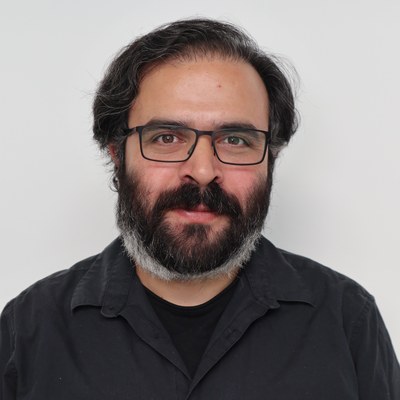
Renato Duarte

Computational Neuroscience & NeuroAI

CNNC Lab · Center for Neuroscience and Cell Biology · University of Coimbra

Renato Duarte

About

I study how the brain computes the mind. My research combines mathematical modeling, biophysics, and dynamical systems theory to build mechanistic models of cortical circuits—from molecular and synaptic processes through dendritic integration and network dynamics to cognitive function. I argue for an integrative approach where biological constraints at every level guide computational models, establishing causal links between biophysical mechanisms and neural computation. I lead the Computational Neuroscience & Neural Computation group at the Center for Neuroscience and Cell Biology, University of Coimbra.

I design and implement large-scale spiking neural network simulations, develop custom analysis and benchmarking tools, and build research software for the computational neuroscience community. I work daily with Python, PyTorch, JAX, and the NEST simulator, and have led computing projects on high-performance infrastructure at the Jülich Supercomputing Centre and, more recently, at the Portuguese National Advanced Computing Infrastructure. My technical work spans biophysical modeling, machine learning and AI, dynamical systems analysis, and scientific software engineering.

Before establishing my group in Coimbra, I held a tenured Assistant Professorship in Cognitive Artificial Intelligence at Radboud University, worked as a postdoctoral fellow at the Forschungszentrum Jülich, and completed a joint PhD across the University of Freiburg and the University of Edinburgh through the Erasmus Mundus EuroSPIN programme (summa cum laude). I write about neuroscience and AI-augmented research at Grounded Neuro.

Research

My research programme bridges cognition and biophysics through computational modeling, unified by dynamical systems theory and a commitment to biological plausibility.

Sequential Computation & Cognition

How do cortical circuits acquire, represent, and generalize sequential rules? I investigate the neural substrates of temporal structure processing, working memory, and compositional generalization—from sensorimotor coordination to language. This line uses spiking neural networks, reservoir computing, and formal language tasks to study domain-general cortical computation.

Sequential Rule Learning Working Memory Compositionality Temporal Integration Spiking Neural Networks

Biophysical Mechanisms & Microcircuits

Learning emerges from coupled electrochemical processes spanning multiple spatial and temporal scales. I build models of heterosynaptic plasticity, dendritic nonlinearities, and canonical cortical microcircuits—grounded in molecular biology and electrophysiology—to explain how local synaptic and cellular mechanisms give rise to circuit-level computation and adaptive behavior.

Heterosynaptic Plasticity Dendritic Computation Cortical Microcircuits E/I Balance Chemoarchitecture

Dynamical Systems & NeuroAI

Transient dynamics, metastability, and attractor landscapes are the computational primitives of recurrent neural circuits. I use dynamical systems analysis, reservoir computing theory, and biologically-constrained machine learning to characterize neural computation and to build brain-inspired AI architectures—bridging neuroscience and modern deep learning.

Dynamical Systems Transient Dynamics Reservoir Computing Biophysical Digital Twins Neuromorphic Computing

Career

2024 – present

Principal Investigator & Assistant Researcher

Center for Neuroscience and Cell Biology (CNC-UC), University of Coimbra

Leading the Computational Neuroscience & Neural Computation group. PI on FCT-funded research on heterosynaptic plasticity and compartmentalized learning.

2021 – 2023

Assistant Professor of Cognitive AI tenured

Department of Artificial Intelligence, Radboud University, Nijmegen

Designed and taught Neural Computation (MSc) and Reinforcement Learning (BSc, 250+ students). Tenure awarded 1.5 years ahead of schedule. Educational Innovation Award.

2018 – 2021

Postdoctoral Researcher

Institute of Neuroscience and Medicine (INM-6), Forschungszentrum Jülich

Led research projects on functional neural architectures and synaptic dynamics. JARA-HPC computing allocation (50M+ core-hours). Guest Researcher at the Max Planck Institute for Psycholinguistics.

2011 – 2018

Doctoral Researcher summa cum laude

Erasmus Mundus EuroSPIN — Albert-Ludwigs-Universität Freiburg & University of Edinburgh

Joint PhD programme across Freiburg, Edinburgh, Bochum, and Jülich. Thesis: “State-dependent processing in Spiking Neural Networks.”

2009 – 2011

MSc Cognitive Neuroscience & BSc Pharmaceutical Sciences

University of Algarve (MSc, Distinction) · University of Coimbra (BSc)

Skills

Simulation & Biophysical Modeling

NESTArborBrian2Spiking NetworksMulti-compartment ModelsConductance-based SynapsesMean-field Models

Machine Learning & NeuroAI

PyTorchJAXTensorFlowscikit-learnDeep LearningRNNsReinforcement LearningNeural ODEsBrain-inspired Computing

Scientific Computing & HPC

PythonC++NumPySciPySLURMOpenMPMPIHPC Clusters

Dynamical Systems & Theory

State-space AnalysisAttractor DynamicsMetastabilityReservoir ComputingBifurcation AnalysisLyapunov Exponents

Data Analysis & Signal Processing

ElectrophysiologyPopulation DynamicsStatistical ModelingManifold LearningMEA AnalysisBasic Multi-Omics Analysis

Software Engineering

GitCI/CDVS Code ExtensionsDockerOpen SourceReproducible ResearchFAIR Principles

Open Source Software

Research tools and contributions to community infrastructure.

FNA

active

Functional Neural Architectures — a Python framework for benchmarking neural circuits across abstraction levels, from rate networks to biophysically detailed spiking models.

NMSAT

archived

Neural Microcircuit Simulation and Analysis Toolkit — a high-level wrapper for reproducible simulation and analysis of spiking neural microcircuits at scale.

MEA-Flow

active

A Python library for multi-electrode array data analysis with a focus on neural population dynamics, manifold learning, and latent state-space analysis.

NEST Simulator

contributor

Core contributions to the NEST simulator ecosystem, including neuron and synapse model implementations, and co-authorship of NESTML code generation tools.

More projects at github.com/rcfduarte and github.com/CNNC-Lab.

Teaching

Course Design & Coordination

Neural Computation MSc AI, Radboud University · 2021–2023 9.5/10 student evaluations
Reinforcement Learning BSc AI, Radboud University · 2021–2023 250+ students · Educational Innovation Award
Scientific Programming PhD programme (idpIN), CNC-UC, University of Coimbra · 2025–2026
Systems & Computational Neuroscience Advanced block course (idpIN/PDBEB), CNC-UC · 2026 5-day intensive with international guest lecturers
Introduction to Scientific Programming with Python BSc Psychology, Ruhr-Universität Bochum · 2013–2017

Guest Lectures & Schools

Synapse Assembly, Function and Plasticity PDBEB+idpIN doctoral programme, CNC-UC · 2024–2026
Neuronal Circuits & Behavior PDBEB doctoral programme, CNC-UC · 2024–2026
Spring/Fall School in Computational Neuroscience EITN, Paris · 2019–2021
Summer School in Computational Biology University of Coimbra · 2024–2025

Selected Publications

For the full list and live citation metrics, see Google Scholar.

2025

SymSeqBench: a unified framework for the generation and analysis of rule-based symbolic sequences and datasets

Zajzon, B., Bouhadjar, Y., Fabre, M., Schmidt, F., Ostendorf, N., Neftci, E., Morrison, A., & Duarte, R

arXiv · doi

2025

Nonlinear dendritic integration supports Up-Down states in single neurons

Quaresima, A., Fitz, H., Hagoort, P., & Duarte, R

The Journal of Neuroscience · doi

2024

A layered microcircuit model of Somatosensory cortex with three interneuron types and cell-type-specific short-term plasticity

Jiang, H.-J., Qi, G., Duarte, R., Feldmeyer, D., & van Albada, S. J

Cerebral Cortex · doi

2024

Phenomenological modeling of diverse and heterogeneous synaptic dynamics at natural density

Korcsak-Gorzo, A., Linssen, C., Albers, J., Dasbach, S., Duarte, R., Kunkel, S., Morrison, A., Senk, J., Stapmanns, J., Tetzlaff, T., Diesmann, M., & van Albada, S. J

New Aspects in Analyzing the Synaptic Organization of the Brain · doi

2023

A refined information processing capacity metric allows an in-depth analysis of memory and nonlinearity trade-offs in neurocomputational systems

Schulte to Brinke, T., Dick, M., Duarte, R., & Morrison, A

Scientific Reports · doi

2023

Signal denoising through topographic modularity of neural circuits

Zajzon, B., Dahmen, D., Morrison, A., & Duarte, R

eLife · doi

2023

The Tripod neuron: a minimal structural reduction of the dendritic tree

Quaresima, A., Fitz, H., Duarte, R., Broek, D. van den, Hagoort, P., & Petersson, K. M

The Journal of Physiology · doi

2021

Unsupervised learning and clustered connectivity enhance reinforcement learning in Spiking Neural Networks

Weidel, P., Duarte, R., & Morrison, A

Frontiers in Computational Neuroscience · doi

2020

Neuronal spike-rate adaptation supports working memory in language processing

Fitz, H., Uhlmann, M., Van Den Broek, D., Duarte, R., Hagoort, P., & Petersson, K. M

Proceedings of the National Academy of Sciences (PNAS) · doi

2019

Leveraging heterogeneity for neural computation with fading memory in layer 2/3 cortical microcircuits

Duarte, R., & Morrison, A

PLoS Computational Biology · doi

2017

Synaptic patterning and the timescales of cortical dynamics

Duarte, R., Seeholzer, A., Zilles, K., & Morrison, A

Current Opinion in Neurobiology · doi

2014

Dynamic stability of sequential stimulus representations in adapting neuronal networks

Duarte, R. C. F., & Morrison, A

Frontiers in Computational Neuroscience · doi

All Publications (25)
  1. Zajzon, B., Bouhadjar, Y., Fabre, M., Schmidt, F., Ostendorf, N., Neftci, E., Morrison, A., & Duarte, R. (2025). SymSeqBench: A unified framework for the generation and analysis of rule-based symbolic sequences and datasets (No. arXiv:2512.24977; Version 1). arXiv. https://doi.org/10.48550/arXiv.2512.24977 doi
  2. Quaresima, A., Fitz, H., Hagoort, P., & Duarte, R. (2025). Nonlinear dendritic integration supports up-down states in single neurons. Journal of Neuroscience. https://doi.org/10.1523/JNEUROSCI.1701-24.2025 doi
  3. Jiang, H.-J., Qi, G., Duarte, R., Feldmeyer, D., & van Albada, S. J. (2024). A layered microcircuit model of somatosensory cortex with three interneuron types and cell-type-specific short-term plasticity. Cerebral Cortex, 34(9), bhae378. https://doi.org/10.1093/cercor/bhae378 doi
  4. Korcsak-Gorzo, A., Linssen, C., Albers, J., Dasbach, S., Duarte, R., Kunkel, S., Morrison, A., Senk, J., Stapmanns, J., Tetzlaff, T., Diesmann, M., & van Albada, S. J. (2024). Phenomenological modeling of diverse and heterogeneous synaptic dynamics at natural density. In J. H. R. Lübke & A. Rollenhagen (Eds.), New Aspects in Analyzing the Synaptic Organization of the Brain (pp. 277–321). Springer US. https://doi.org/10.1007/978-1-0716-4019-7_15 doi
  5. Schulte to Brinke, T., Dick, M., Duarte, R., & Morrison, A. (2023). A refined information processing capacity metric allows an in-depth analysis of memory and nonlinearity trade-offs in neurocomputational systems. Scientific Reports, 13, 10517. https://doi.org/10.1038/s41598-023-37604-0 doi
  6. Zajzon, B., Duarte, R., & Morrison, A. (2023). Toward reproducible models of sequence learning: Replication and analysis of a modular spiking network with reward-based learning. Frontiers in Integrative Neuroscience, 17. https://doi.org/10.3389/fnint.2023.935177 doi
  7. Zajzon, B., Dahmen, D., Morrison, A., & Duarte, R. (2023). Signal denoising through topographic modularity of neural circuits. eLife, 12, e77009. https://doi.org/10.7554/eLife.77009 doi
  8. Schulte to Brinke, T., Duarte, R., & Morrison, A. (2022). Characteristic columnar connectivity caters to cortical computation: Replication, simulation, and evaluation of a microcircuit model. Frontiers in Integrative Neuroscience, 16. https://doi.org/10.3389/fnint.2022.923468 doi
  9. Quaresima, A., Fitz, H., Duarte, R., Broek, D. van den, Hagoort, P., & Petersson, K. M. (2023). The Tripod neuron: A minimal structural reduction of the dendritic tree. The Journal of Physiology, 601(15), 3265–3295. https://doi.org/10.1113/JP283399 doi
  10. Weidel, P., Duarte, R., & Morrison, A. (2021). Unsupervised Learning and Clustered Connectivity Enhance Reinforcement Learning in Spiking Neural Networks. Frontiers in Computational Neuroscience, 15. https://doi.org/10.3389/fncom.2021.543872 doi
  11. Fitz, H., Uhlmann, M., Van Den Broek, D., Duarte, R., Hagoort, P., & Petersson, K. M. (2020). Neuronal spike-rate adaptation supports working memory in language processing. Proceedings of the National Academy of Sciences of the United States of America, 117(34), 20881–20889. https://doi.org/10.1073/pnas.2000222117 doi
  12. Zajzon, B., Duarte, R., Mahmoudian, S., Morrison, A., & Duarte, R. (2019). Passing the Message: Representation Transfer in Modular Balanced Networks. Frontiers in Computational Neuroscience, 13(December), 79. https://doi.org/10.3389/fncom.2019.00079 doi
  13. Bachmann, C., Tetzlaff, T., Duarte, R., & Morrison, A. (2020). Firing rate homeostasis counteracts changes in stability of recurrent neural networks caused by synapse loss in Alzheimer’s disease. PLOS Computational Biology, 16(8), e1007790. https://doi.org/10.1371/journal.pcbi.1007790 doi
  14. Duarte, R., & Morrison, A. (2019). Leveraging heterogeneity for neural computation with fading memory in layer 2/3 cortical microcircuits. PLOS Computational Biology, 15(4), e1006781. https://doi.org/10.1371/journal.pcbi.1006781 doi
  15. Duarte, R., Uhlmann, M., van den Broeck, D., Fitz, H., Petersson, K. M., & Morrison, A. (2018). Encoding symbolic sequences with spiking neural reservoirs. Proceedings of the International Joint Conference on Neural Networks, 2018-July, 1–8. https://doi.org/10.1109/IJCNN.2018.8489114 doi
  16. Zajzon, B., Duarte, R., & Morrison, A. (2018). Transferring State Representations in Hierarchical Spiking Neural Networks. Proceedings of the International Joint Conference on Neural Networks, 2018-July, 1–9. https://doi.org/10.1109/IJCNN.2018.8489135 doi
  17. Duarte, R. (2018). State-dependent processing with Spiking Neural Networks [Doctoral dissertation]. Albert-Ludvigs Universitat Freiburg. http://hdl.handle.net/2128/19337
  18. The best spike filter kernel is a neuron https://ccneuro.org/2017/abstracts/abstract_3000204.pdf
  19. Duarte, R., Seeholzer, A., Zilles, K., & Morrison, A. (2017). Synaptic patterning and the timescales of cortical dynamics. Current Opinion in Neurobiology, 43, 156–165. https://doi.org/10.1016/j.conb.2017.02.007 doi
  20. Weidel, P., Djurfeldt, M., Duarte, R., & Morrison, A. (2016). Closed loop interactions between spiking neural network and robotic simulators based on MUSIC and ROS. Frontiers in Neuroinformatics, 10(31), 1–19. https://doi.org/10.3389/fninf.2016.00031 doi
  21. Duarte, R. (2015). Expansion and State-Dependent Variability along Sensory Processing Streams. The Journal of Neuroscience, 35(19), 7315–7316. https://doi.org/10.1523/JNEUROSCI.0874-15.2015 doi
  22. Toledo-Suárez, C., Duarte, R., & Morrison, A. (2014). Liquid computing on and off the edge of chaos with a striatal microcircuit. Frontiers in Computational Neuroscience, 8(November), 130. https://doi.org/10.3389/fncom.2014.00130 doi
  23. Duarte, R. C. F., & Morrison, A. (2014). Dynamic stability of sequential stimulus representations in adapting neuronal networks. Frontiers in Computational Neuroscience, 8(October), 124. https://doi.org/10.3389/fncom.2014.00124 doi
  24. Duarte, R., Seriès, P., & Morrison, A. (2014). Self-Organized Artificial Grammar Learning in Spiking Neural Networks. In P. Bello, M. Guarini, M. McShane, & B. Scassellati (Eds.), Proceedings of the Annual Meeting of the Cognitive Science Society (Vol. 36, Issue 36, pp. 427–432). Cognitive Science Society. https://escholarship.org/uc/item/75j1b2t0 link
  25. Duarte, R. (2011). Self-organized sequence processing in recurrent neural networks with multiple interacting plasticity mechanisms [University of Algarve]. http://sapientia.ualg.pt/handle/10400.1/3786 link